Still Paying Attention: How Short-Form Content is Reshaping Journalism
By Meghan Boucher
News outlets are relying too much on social media. As a result, they are misunderstanding their Gen Z news consumers, while investing in platforms that are not financially viable long-term.

(Gen Z is scrolling for the news)
For the first time, social media has surpassed TV as the way most Americans get their news, according to the 2025 Digital News Report from Oxford’s Reuters Institute for the Study of Journalism (RISJ). So it makes sense that newsrooms would start posting more content online. But they are fundamentally misunderstanding a huge percentage of their following: Gen Z.
Data from the Pew Research Center show that between 40% and 43% of Gen Z use social media to get their news.
Newsrooms have seen the numbers and doubled down on making short-form content. More reels, more TikToks, attempting to meet Gen Z news consumers where they are. But in doing so, they’re misreading what Gen Z actually wants, while pouring resources into social media platforms that may not be sustainable long term. The real money is in getting eyes on their websites, where long-form content lives.
Social media is a tool. Are newsrooms treating it like a destination?
The Attention Span Myth
Scroll. Stop. Watch. Scroll
Emerson College student, Joshua Truesdale, 21, sat on a park bench on Commonwealth Avenue, taking a break from his afternoon stroll. What was intended to be a brief social media scroll turned into a news frenzy, leaving Truesdale feeling something he didn’t expect: betrayed.
“I don’t need my news dumbed down in a thirty-second video,” said Truesdale. “But it feels like news outlets take one statistic and run with it.”
The assumption in newsrooms is simple: younger generations can’t focus, so give them shorter content. However, that grossly oversimplifies the situation.
Research conducted by Gloria Mark, PhD, shows that attention spans have decreased over the past 20 years — not because people spend too much time on their phones, but because the way we get information has changed. This idea of the “endless scroll” is a design of technology to keep us craving short-form content, quick hits, and then on to the next. Gen Z is aware of these issues.
Truesdale said that his weekly screen time on social media apps like TikTok or Instagram can reach up to 16 hours. For him, it becomes a sort of defense mechanism.

(Joshua Truesdale looks for news on his phone)
“I know I need to delete the apps…but what if I miss something?” he said. “We do have so much access from around the world at any moment. We’re not built to receive all this information at once.”
That’s why those first few seconds of a video need to be so captivating: not because they can’t pay attention, but because they have to decide if it’s worth their attention.
Julie Khanna kept this in mind when she founded The Wellington Edit, a local publication covering news and entertainment in Florida. Social media was seen as an editorial tool, not just a marketing strategy. Khanna’s goal in this move was to expand upon the rising trends seen in Gen Z.
“Our brains are being challenged to process information quicker and differently, and shortened attention spans are the byproduct,” she said. “The conversation is shifting from passive consumption to conscious participation.”
Lindsay Chastain, a public relations and marketing strategist, poses a different question.
“Is it really an attention issue? Or is it because they're so used to having all of this information at their fingertips that they want to get the most information possible from the most different sources in the least amount of time so they can go back to doing something else?” she asked.
However, understanding the way Gen Z consumes news isn’t just an editorial question, but also a financial one. And to understand the money, you have to understand the behavior.
The Gateway
When Gray Gailey was eight years old, she created her very own YouTube Channel, Wondermint Kids, which has amassed hundreds of thousands of views. Now 20, she has created her own blog, GirlFolk, which is dedicated to elevating younger writers and giving readers a place to engage with each other. Gailey is no stranger to long-form content; it’s what she’s based her personal brand around.
“Gen Z doesn’t want to feel like they were given up on. The point of my blog specifically is to create a space where they can discover the stories that spark an interest,” she said.
And yet, she still scrolls.
“Social media is how I find the things I’m interested in, and decide what is worth my time to explore more,” she said.
It usually starts with a brief clip of a podcast on TikTok, and then she closes the app to listen to the full hour podcast on her way to class or on her daily walk. In fact, Gailey’s not alone in this. The 2025 RISJ report found that of the countries surveyed, the U.S. had the highest percentage of young adults who listen to news podcasts, at 15%.
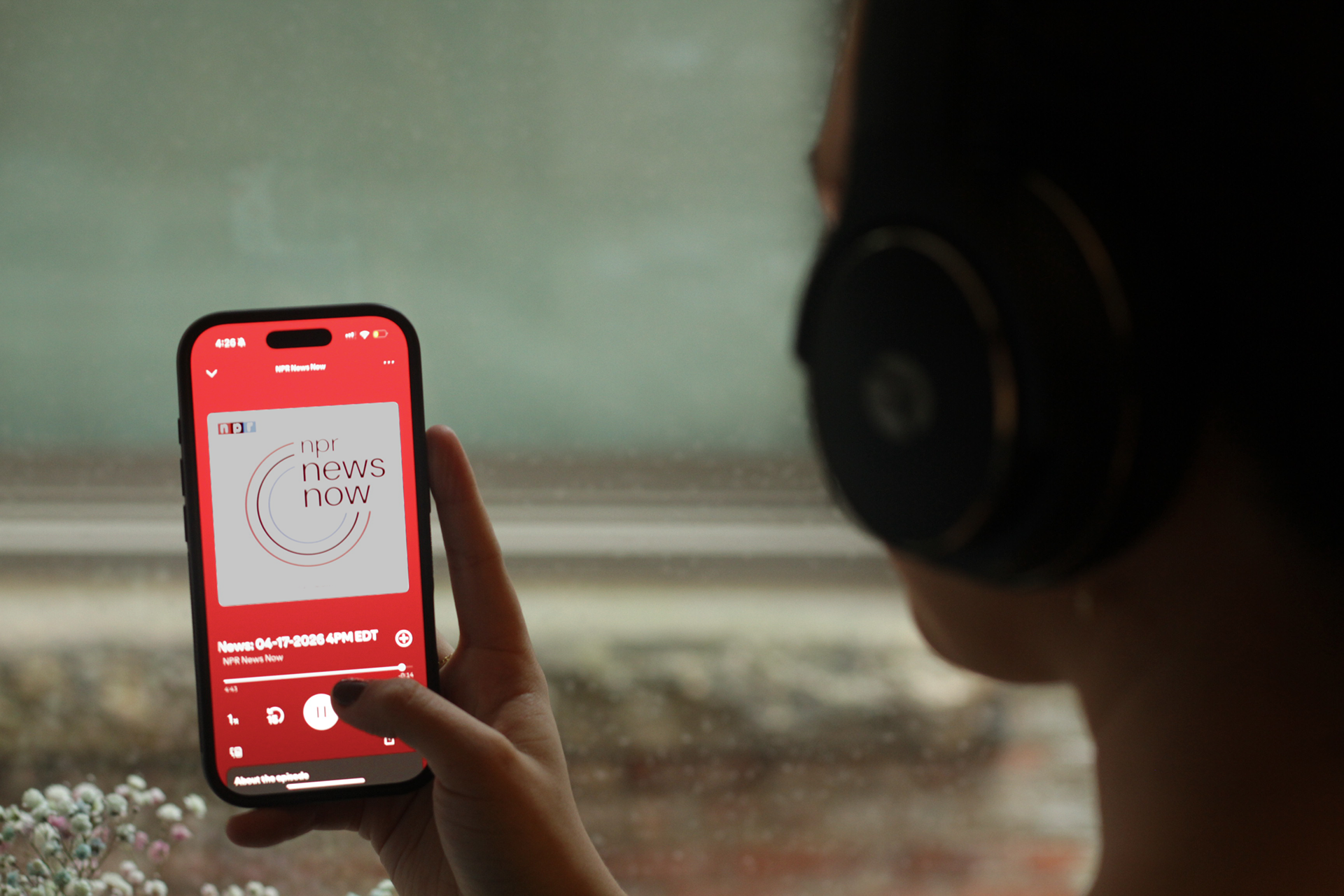
(Gray Gailey listening to a podcast)
“It can be easy to get sucked in, but engaging in something long-form is much more fulfilling,” Gailey said.
This sentiment is shared among Gen Z. In 2022, a report by Ipsos examined engagement with one of the biggest frontrunners in long-form content: YouTube. The study found that 59% of those surveyed (Gen Z individuals from 18-24 years old) use short-form content as a discovery tool to find longer-form content that speaks to them.
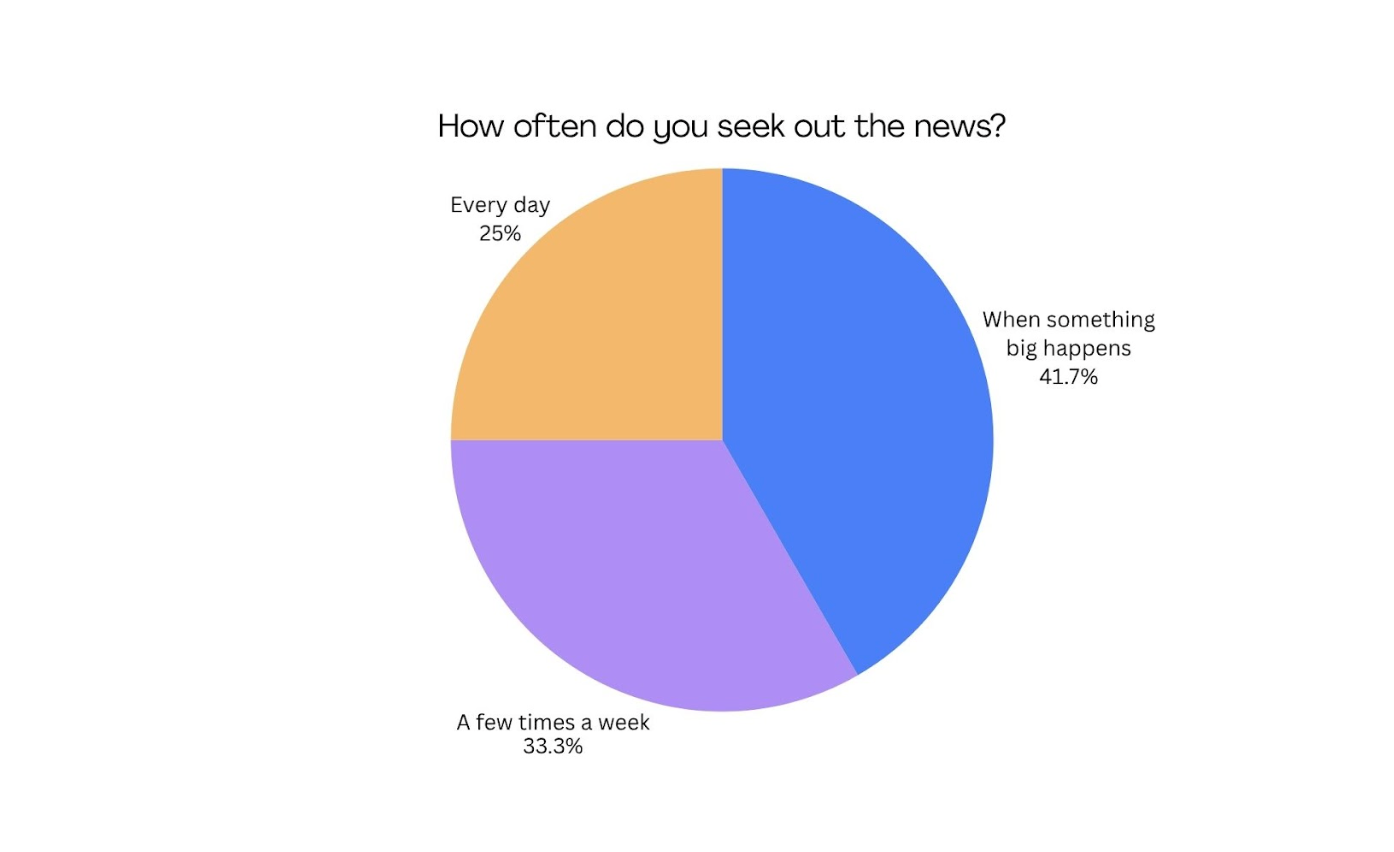
A survey posted around Boston college campuses, including Emerson College, Boston University, and Northeastern University, found that most Gen Z individuals only check the news when something big happens (41.7% of the 50 respondents). This might look like a bad statistic for newsrooms, but it shows a clearer path to better engage with young audiences.
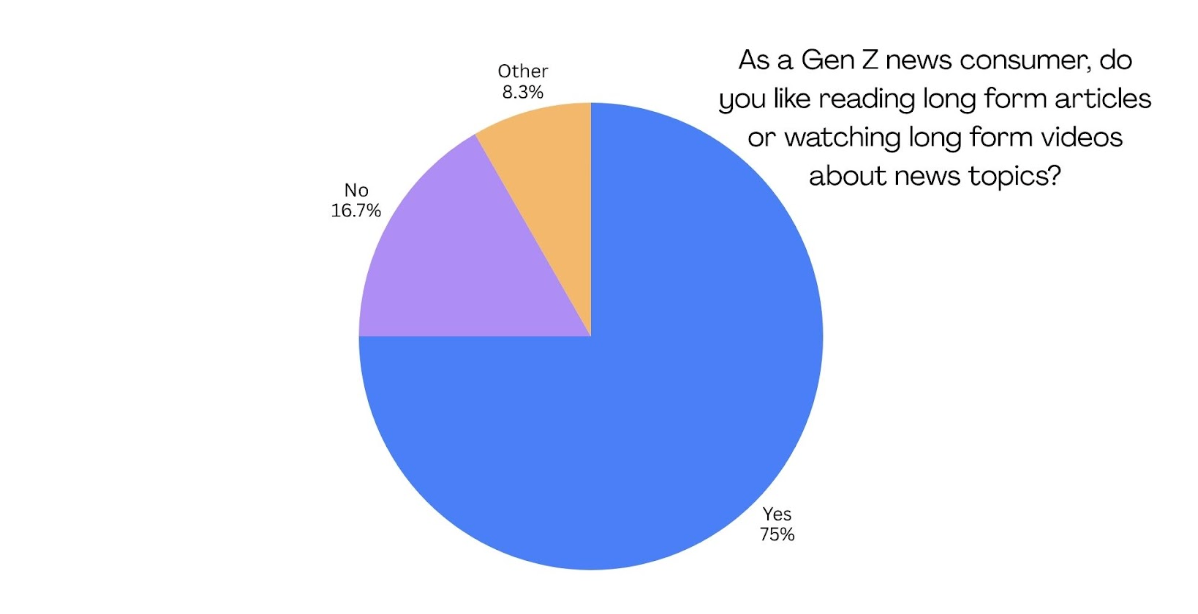
The survey also found that 75% enjoy long-form articles or videos looking into news topics. There is an overlap here. Someone can check the news rarely and dive deeper. The question is, are newsrooms giving them a stable platform to dive off of?
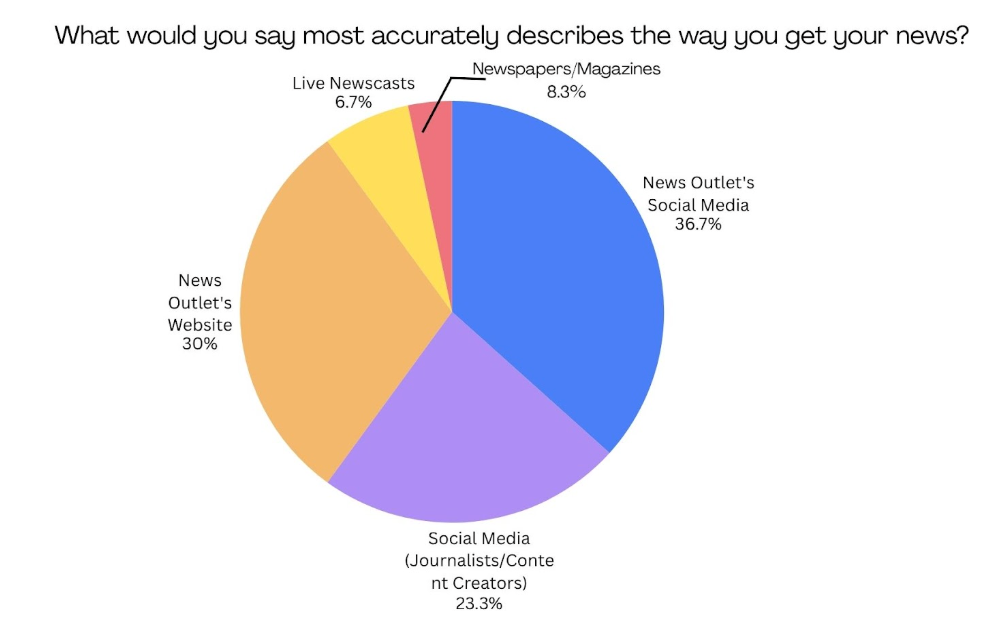
Of those surveyed, 36.7% said they get their news on social media from the news outlets themselves, like watching TikToks or Instagram reels posted by outlets like ABC, NBC, and others. Another close margin, at 30%, showed that individuals get their news straight from news websites, including The Boston Globe or The New York Times.
What it means for journalism is that there is still value in long-form, but journalists need to know how to market those stories. Tessa Kaday, a Director of Product at Trint, an AI transcription company, said that this attention span phenomenon is actually good news.
“High volumes of short-form consumption are less a sign of reduced attention spans and more an evolution of browsing behavior,” said Kaday, calling short-form video consumption a “gateway to deeper engagement, rather than a substitute for it.”
There is a real desire from younger generations to consume long-form news content. It could be in the form of a podcast, as Gailey likes, or long investigative articles on The New York Times. The desire to learn and be engaged hasn’t disappeared.
That’s the secret sauce: use short form to get Gen Z to read the long form. And this is becoming increasingly more important, not because long-form provides more in-depth reporting, but because that’s where the money is.
News Creators
From the same survey, 23.3% of Gen Z individuals said they get their news from independent journalists or content creators on social media. One name that rose to the top was Aaron Parnas, with 27 responses citing him as a news source. Parnas started posting on TikTok in 2022 and has amassed 5.2 million followers and 2.9 million on Instagram.
However, some social media users have posted videos calling out Parnas for only reading headlines and not adding more context to the situation, but he still appeals to what Gen Z is looking for online. In one of these videos, a commenter wrote, “His brevity works for me, and then I go find more info on the topics that interest me.”
For Gen Z, news consumption doesn’t just stop at the headline or after a 30-second video. If they are interested, they’ll continue to discover more.
Parnas also uses auto captioning. A study done by PubMed shows that closed captioning helps with retention, and according to Kaday at Trint, “captions can improve understanding and information retention…increas[ing] completion rates for longer content,” she said
This translates to another platform Parnas has a strong presence on: Substack, which is linked in all his social media bios.
According to the Press Gazette, Substack was one of the only four news sites to see growth between 2024 and 2025. As of March 2026, the site has 94 million visits and is the 13th most-visited news site in the U.S., showing a migration from social media to places that post longer content.
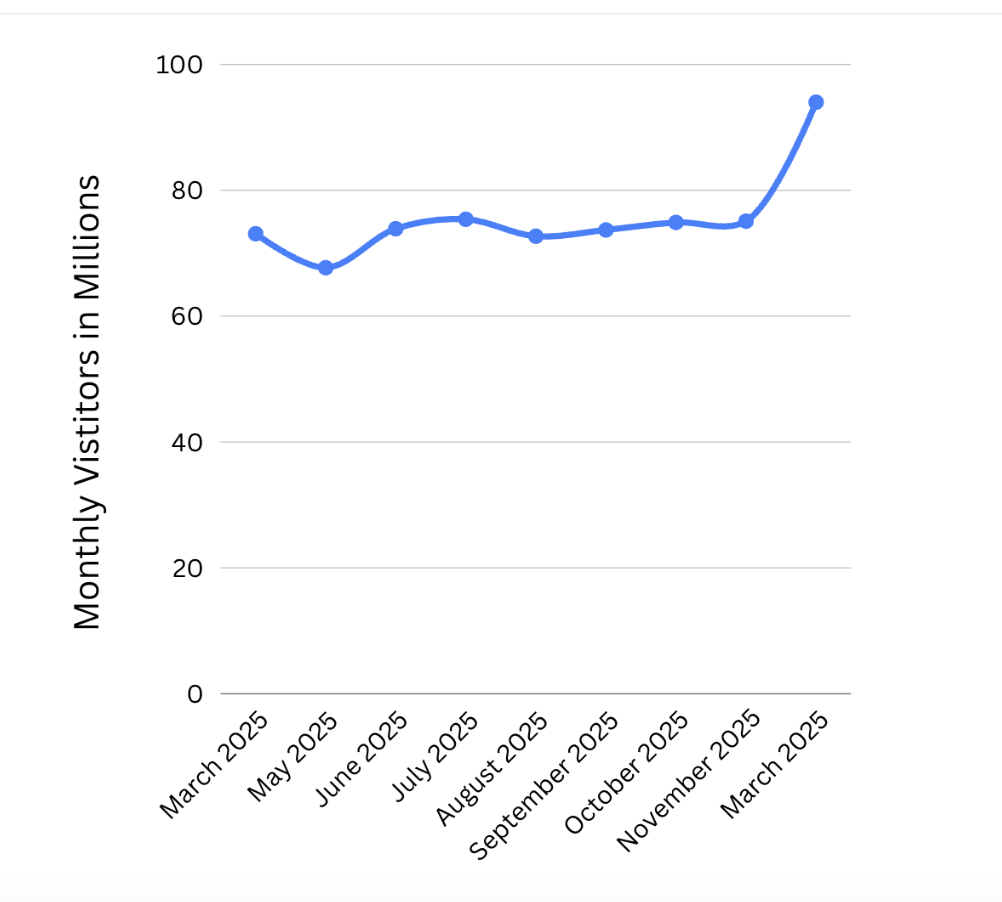
(Data from Press Gazette)
Parnas has built a brand beyond the scroll. His Substack, titled The Parnas Perspective, has nearly 800,000 subscribers with the tagline “Providing you with the Gen Z perspective on all the issues in the news.”
Parnas is doing exactly what legacy outlets should be doing. He’s appealing to a Gen Z audience, using tools to help them stay engaged, while providing more in-depth reporting elsewhere.
However, the question remains: Is this a financially viable option for newsrooms to follow suit?
A TikTok video (which has since been deleted) called out Parnas for making thousands of dollars online for simply “reading headlines.” In response, Parnas commented, “This is objectively not true—my RPM [revenue per 1,000 views] is less than 1 penny for almost all of my videos. I wish I were making that much. But thanks for making the call out!”
The model is working well in terms of engagement, but the money hasn’t caught up. The journalists doing it within legacy newsrooms are facing the same issue.
Sue O'Connell is a political commentator at NBC 10 Boston. With over 93,000 followers on TikTok, she makes videos almost every single day, all with attention-grabbing openings and conversational language. Chastain explains the appeal: “Gen Z really doesn't want to engage with corporations. They want to engage with people.”
Despite including in-depth reporting and seeing social media success, neither O’Connell nor NBC sees a dime from her videos.
“Newsrooms and networks still haven’t figured out a reliable way to make money off short-form social media content. We’re businesses, so when staff time and resources are redirected to social platforms…that’s a lot of additional work without a clear financial payoff,” said O’Connell.
Sustainability
It is true that if Gen Z is interested, they’ll leave a social media site to look into a topic more in depth. However, platforms like TikTok and Instagram don’t always make this easy, because these apps are meant to keep you scrolling. On Instagram, you can only include links in your bio. For newsrooms, this prohibits them from linking longer stories directly to their social media posts.
TikTok is a different story. Many newsrooms, including ABC, NBC, and CBS, link their articles directly to their posts. However, a report published in New Media & Society in 2023 found “a lack of algorithmic news distribution on TikTok” with “almost no evidence of proactive news exposure.” It is becoming increasingly common for news content to be deprioritized by TikTok in favor of more “entertaining” content.
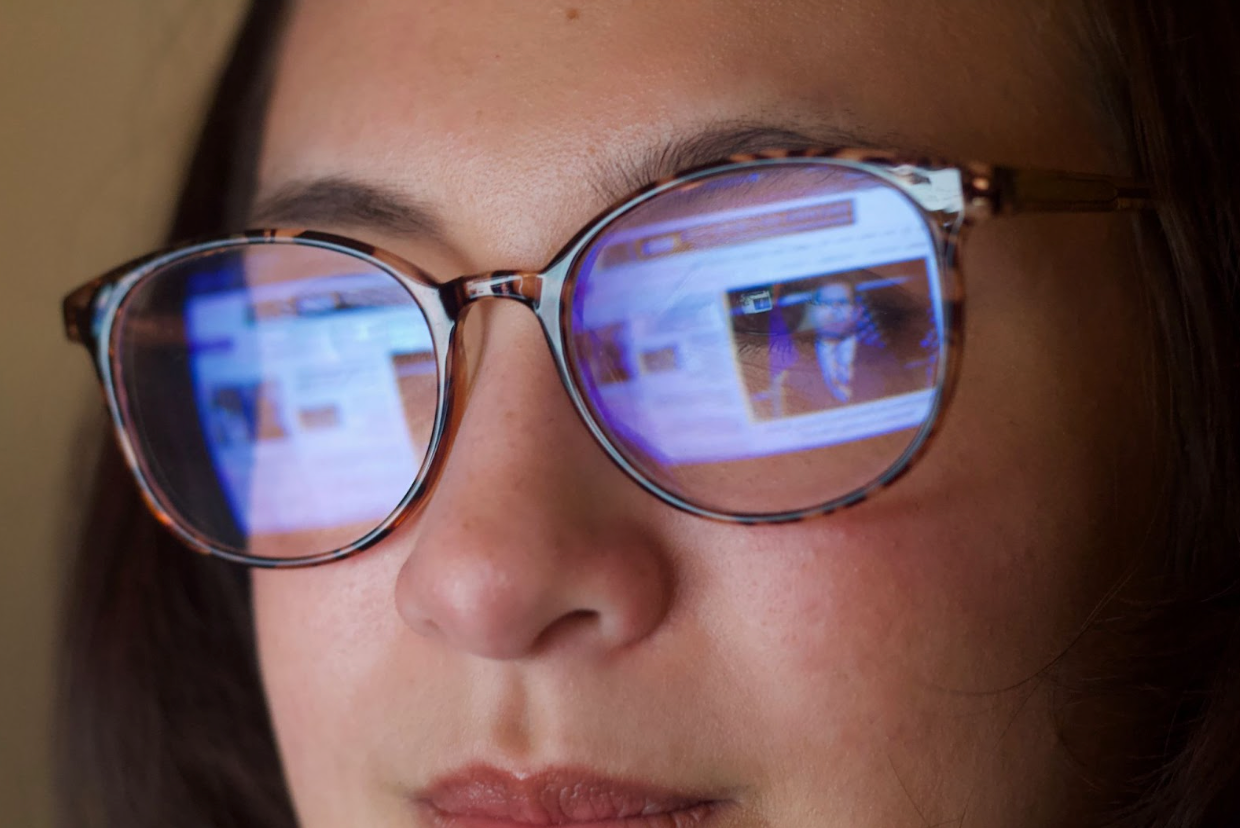
(Gray Gailey finds news)
What this means is that despite all the effort, time, and resources put into creating short-form content, news outlets are at the mercy of the algorithm. It’s not guaranteed that those videos will reach the audience. Even when they do, when one of O’Connell’s posts gets thousands of views, it’s not a guarantee that the user will leave to go to NBC’s website. And if these news outlets aren’t getting this website traffic, then they are investing a lot of resources into something that’s making them no money.
According to O’Connell, the main way places like NBC are making money is through advertisements on their websites or broadcasts, not views on social media. And people like O’Connell are expected to create content without additional compensation for their work. For most reporters, becoming a content creator is an expectation, not a bonus.
The Platform Dependence
However, this move to social media isn’t new, and the problems that come with it aren’t either.
Research from the Tow Center for Digital Journalism at Columbia Journalism School in 2016 found that news organizations' top concerns when it came to publishing on social media were “lack of data, loss of control, the uncertainty of financial return, and the potential obscurity of their brand in a distributed environment.” Data from the report also found “no clear returns in terms of increased advertising revenue.”
Back in 2016, Twitter, Snapchat, and Facebook were the front-runners in the social media world, but nearly a decade later, these issues still exist on platforms like TikTok and Instagram.
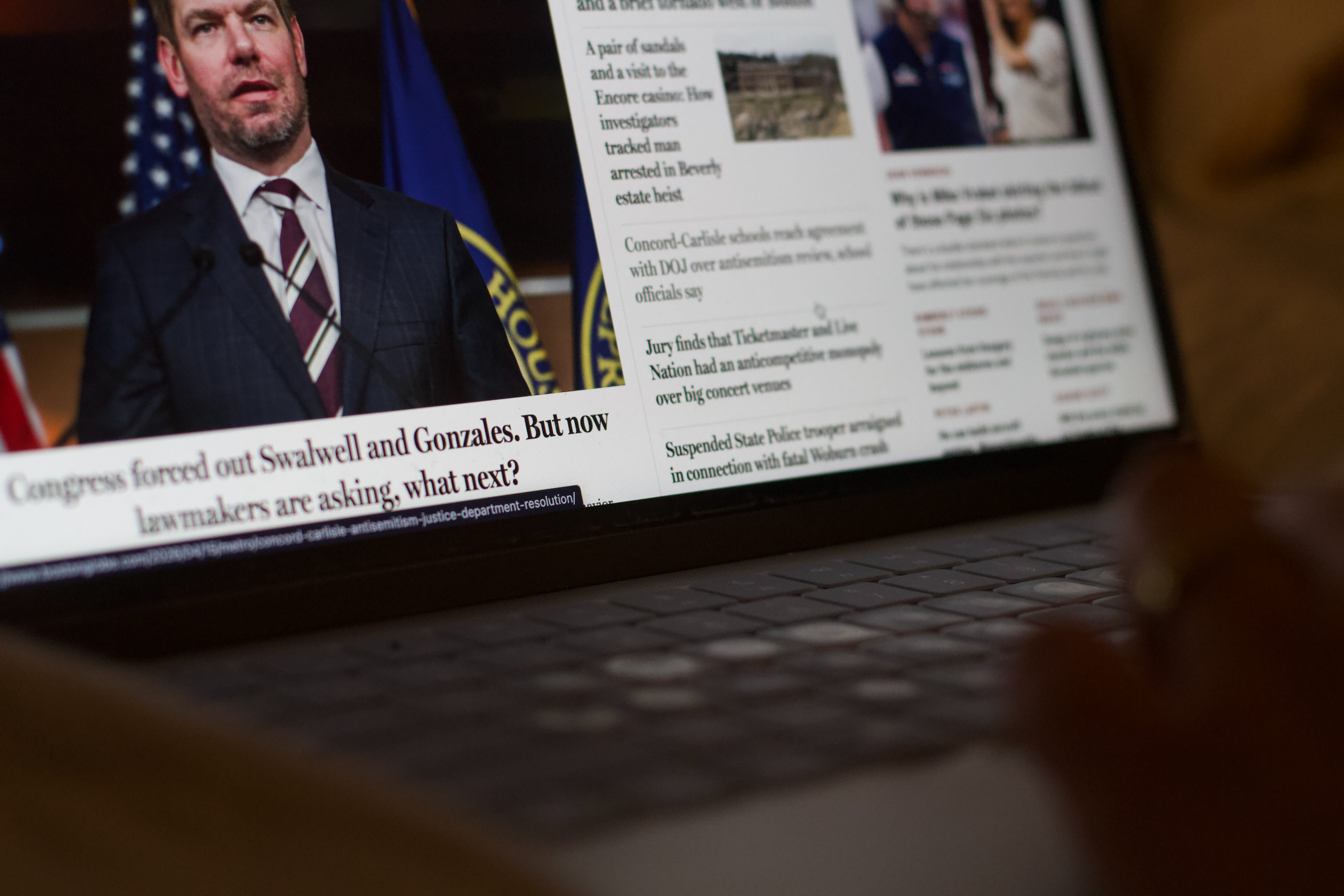
(Reading long-form is important to Gen Z)
The Tow Center also conducted a 2025 report, examining what has changed. The answer is not much. One of the most important ways news outlets can sustain a committed audience is through building trust and brand identity. However, when you do so on platforms like TikTok, where they don’t have control over distribution or finances, there’s little autonomy in how the news is being produced. One news executive quoted in the study said, “We built elsewhere, and then we rented, in a sense, and then the landlord evicted us.”
Journalists are putting in the work to grow an audience that belongs to the outlets, not themselves. And when platforms change their algorithms, this shaky structure begins to crumble.
Distrust Online
Anyone can log on to TikTok, read a sensationalized headline, and get lots of views. But is everything they say true?
It’s normal to be wary of what you see online. According to the RISJ report, in the U.S., 73% of citizens say they are “concerned about their ability to tell what is true from what is false when it comes to news online."
Danna Tabachnik, a Gen Z communication expert and brand strategist at Bear Icebox Communications, said one of the biggest challenges with creating news online is ensuring that Gen Z is able to discern fake news from reality.
“The issue is definitely accessibility to trusted news, but it's also just accessibility and the ability to process information correctly,” she said. "We weren't necessarily taught to internalize and reflect. We were kind of fed information and told to figure it out for ourselves.”
She said the biggest question is how news outlets can make sure people are not only getting their news, but also understanding it. That's where fact-checking plays a huge role.
Ellen Hine is a Senior Audience Engagement Producer at PolitiFact, an independent fact-checking website, and she said their goal is to “reach people where they are.”
Not everyone is prepared to fact-check everything they scroll past online. According to Hine, fact-checking is all about “cleaning up the information ecosystem.”
However, fact-checking can often be reactive, not preventative. By the time a false narrative is put out, the video could have thousands of views.
Social media pumps out content fast, but well-reported, credible journalism takes time. There has to be a mutual understanding between creator and consumer about the expectations of how media is produced. When that understanding is reached, social media and long-form can coexist peacefully in the “information ecosystem.”
“If we can figure out how to be a part of that shift while still maintaining the core ethics that you want to follow in journalism, you will be able to master that [balance],” said Hine.
However, even if every news video on social media was 100% factual, news outlets are businesses, and social media isn’t the money-making machine most people might think it is.
Where the real money lies, the money that will keep newsrooms afloat, is in advertisements on their websites. What those websites offer is long, in-depth reporting. The kind of news Gen Z wants.

(Joshua Truesdale sits and scrolls)
As Truesdale finished up his scroll, he opened up a notes app titled “Articles to Read Later.” It’s a bulleted list of topics he found while scrolling that he wants to read more about.
“Everyone succumbs to the ‘whether or not I’m interested in the first few seconds of a post.’ I’ll read headlines and then move on,” he said. “But I’m trying to learn more, read more. It’s important to me.”
Newsrooms can’t put all their eggs into one technological basket. Until social media can be reliably monetized and perfectly fact-checked, it shouldn’t be treated as the end goal. The question isn’t whether Gen Z can pay attention to the news; it’s whether newsrooms will be able to stay afloat long enough to inform them.